A few weeks ago, I mentioned that I had been reading Marshall McLuhan’s (2010) extraordinarily perspicacious Understanding Media, originally published in 1964. I haven’t written about it here – not least because I have been busy settling into my MA. Another reason is there is so much to consider and digest and I will certainly need to re-read several chapters, probably several times. However, there is also something to do with language that has been troubling me.
Like most people who encounter McLuhan, I am constantly astounded by his grasp on where the technological revolution was likely taking us. I started engaging with his ideas halfway through my Open College of the Arts (OCA) photography degree, itself delivered digitally and which I could never have done any other way (long before Covid triggered further digital integration). I recall watching a lecture of his and being really taken with the ideas he was discussing. And in particular, that the invention of writing, 3000-5000* or so years ago, introduced a linear pattern to our thought processes and consequently our way of being. And how, said McLuhan, modern ‘electronic’ technologies would undo and replace that sense of linearity which we have lived with since. Of course, there are many similar and related books by other writers saying the same nowadays. Vilém Flusser’s (2000) Towards a Philosophy of Photography, originally published in 1984 and introduced to me several years ago by a fellow OCA student, and which we are currently looking at on my MA, begins with a statement about the profundity of this transition. (Flusser positions the nexus of the media revolution firmly and resolutely in the domain of the technical image itself, rather than with media in general as McLuhan does.) However, something about McLuhan’s clarity and complete confidence in his thesis had a significant impact on my thinking and, without any doubt, has informed all subsequent work – which has evolved into an investigation around language and language materials (i.e. text, code, image, audio).
I have enjoyed reading Understanding Media and it will no doubt contribute to continued experiments and inquiries. But sometimes I find the very language he uses uncomfortable, and if McLuhan were writing today, I suspect he may have avoided certain words and phrases employed without question in the twentieth century to describe people and groups. For instance, in ethnography, I believe the word ‘primitive’ to describe people has largely and quite rightly been consigned to the historical dustbin. And I want to know precisely what McLuhan means by tribal. Today, such terms often seem old-fashioned at best, or too generalised, and at worst, fraught with historical violence, connoting all sorts of Western pre-conceptions to do with Otherness which have plagued anthropology and other social sciences since their colonially-related beginnings. These conceptions are currently being excavated, examined, re-evaluated, although it triggers rage and yet more violence in those who bleat on about ‘wokeness’ or ‘cancel-culture’.
In their recently published The Dawn of Everything: A New History of Humanity (2021) the late anthropologist David Graeber and archaeologist David Wengrow deconstruct and examine notions of a supposed pre-civilised era that Westerners have long imposed on peoples and cultures outside of historical Europe. They ask how the reductive myths of ‘naive simplicity’ and Garden of Eden scenarios are kept alive; myths that convey a fixed and linear progression of social evolution that could only ever begin with apes, leading to protohumans – then hunter-gatherers, on to farming, then city-states and eventually industrialisation. They discuss a far more lively, entangled, organic picture based on updated archaeological evidence which undermines our simplistic linear narratives. And language plays a major role. For example, the pair point out that the word forager, commonly used to describe pre-agrarian existence is a misnomer since lands have long been tended to by indigenous peoples; “What to a settler’s eye seemed savage, untouched wilderness usually turns out to be landscapes actively managed by indigenous populations for thousands of years through controlled burning, weeding, coppicing, fertilising and pruning, terracing estuarine plots to extend the habitat of particular wild flora, building clam gardens intertidal zones to enhance the reproduction of shellfish, creating weirs to catch salmon, bass and sturgeon, and so on” (ibid; 149). With this updated understanding, the whole idea of ‘pre-agrarian’ suddenly becomes questionable.
I do not wish to undermine McLuhan’s status or his incredible thesis, or the admirable way he managed to share these ideas with the general population (which I understand some of his more sneery contemporaries frowned upon). His work will continue to be immensely important to me. Nor am I implying he was racist – having seen and heard McLuhan speak in interviews, it’s obvious he was far more aware, educated and sensitive than most. But these words I mention in his work are difficult and loaded. They have become so. I suspect McLuhan, more than anyone would appreciate this, since his work does not merely refer to technological devices and processes, but instead, to the social, conscious, systemic, structural revolution currently taking place, which he recognised long before most; an evolution away from the linear-dominated understanding of everything. But it can make some of the things I want to pursue challenging. For instance, McLuhan (2010; 261) says, “in a native society, there is no true art because everybody is engaged in making art”. As he uses primitive elsewhere, what does that mean for his use of the word ‘native’? Perhaps the underlying implication is backed up by Graeber and Wengrow (2021; 139) who write, “Lévi Strauss remarked that turn-of-the-century Kwakiuti were like a society where a dozen different Picassos were operative all at the same time”. Although they are supportive of Strauss in general, I feel concerned about falling into exactly the trap the pair are asking us to avoid – over-simplifying and romanticising. Elsewhere McLuhan suggests that as we move away from linear thinking towards an entangled, post-historical existence, we are becoming more tribal – is he using tribal, primitive and native interchangeably? If not, how best to differentiate and draw out the most useful implications without excusing or ignoring transgressions? (And how should we cope with retrospective transgressions?) If I can work that out, perhaps I can more adequately explore the role of art today, where so much content made by YouTubers and TickTockers, who may not call themselves artists, might nevertheless make the original Dadaists delightedly envious with their weirdness. But because language can feel so dangerous, I feel I have to tread carefully as I draw on these ideas about our society evolving in different directions – remaining constantly alert to the trap of implying backwards steps with McLuhan’s use of the word ‘primitive’, or so-called advancements according to imperial logic which feels increasingly awkward and narrow. Equally, I would be extremely wary of dismissing any of that YouTube content (as I’ve seen some do, for a variety of reasons, sometimes appropriating and turning it into a kind of scathing art with a superiority complex), merely because it isn’t made within the confines of so-called “ART” proper.
I doubt Greaber and Wengrow’s book could have been written without the revolution in thought McLuhan recognised in 1964. Across disciplines, we are learning that instead of the straight-forward-facing arrow of human development, social evolution (and biological for that matter) goes back and forth, branches split and meet up again, experiments are repeated. Because language feels so precarious right now – as it would be, given its role as the skeleton around which society is formed, and in our case, a society arguably experiencing trauma as it transforms, when older systems die and new ones emerge, sometimes violently – I am grateful to the timely publication of Graeber and Wengrow’s The Dawn of Everything, which excavates the terms McLuhan relied upon to illustrate his thesis.
*Dates are constantly being re-evaluated as more data emerges, contributing to the re-evaluations Graeber and Wengrow explore .
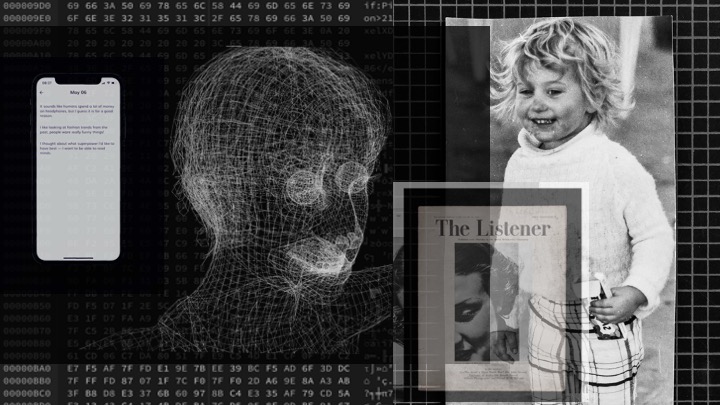
Image from a presentation given in 2021 about my progress through the Open College of Arts to OCA students and my final BOW project, why is there an astronaut in a field of flowers/.
Edited to include Flusser’s original publication date.
Refs
Flusser, V. (2012) Towards a philosophy of photography. London: Reaktion Books.
Field, SJ., AI (2021) why is there an astronaut in a field of flowers [multi-media]. Available at: https://www.sarahjanefield.com/flowers. (Accessed 28/10/2021)
GRAEBER, D., Wengrow D. (2021) DAWN OF EVERYTHING: a new history of humanity. London: ALLEN LANE.
McLuhan, M. (2010) Understanding media: the extensions of man. (Repr) London: Routledge.