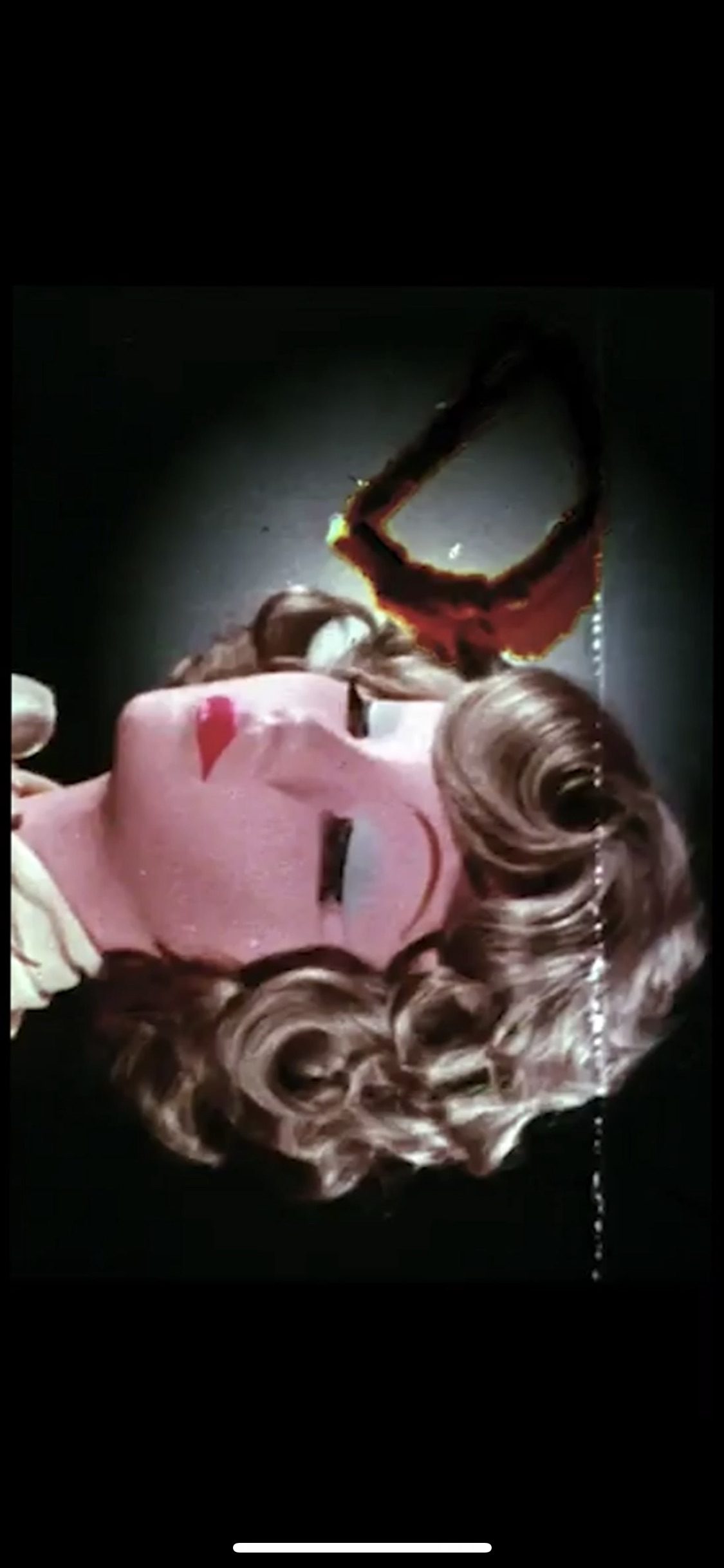
A film calibration frame known as a leader lady, turned on its side: a mannequin head with a pale pink face, closed eyes, bright red painted lips and a curled brown wig lies against a dark background. Above the head, a burn hole has eaten through the film, its edges scorched red and orange, and a line of tiny white specks runs down one side of the frame.

Field Notes


  • Latest posts
  • Lexicon Home
    • About the Lexicon & an invitation to contribute
    • Lexicon
    • Lexicon FAQs
    • Lexicon Submission
  • Key Projects (Notes)Notes, news, questions and elements that may or may not have made it into projects.
    • Lexicon
    • Sense & ReasonSense & Reason was an eighteen-month online call-and-response project, enacted over social media and via email. Solicited contributions were folded back into the work itself, which explores human language and cognition across kinds, our entanglement with machine-learning processes, and the future of the image. (Or perhaps, the image of the human?)
    • BHAM💥 & The Doughnut(W)Hole
    • Orpheus in Homebase & Other Images
    • Telematic PeopleLanguage materials – organic and lively, image or text, code, metal and glass – in dialogic flow, inspired by Vilém Flusser’s (1985) ‘Into the Universe of the Technical Image’. Collaboration between Maria Ahmed, me and the apparatus, leading initially to a zine.
    • LAMELLA://
      • LAMELLA:// thoughts and scribblings
      • LAMELLA:// Attributions & contributions
      • dialogues for one BIBLIOGRAPHYResearch project that informed LAMELLA://
    • why is there an astronaut in a field of flowers/
  • Information
    • Preoccupations
    • Biography & CV
    • Telematic People Publications 🛒
    • Labour
    • Contact
  • Published Writing & Talks
  • Search and Archive
  • Portfolio
A B D E I M P S T

Image

September 27, 2026
Reading Time: 4 minutes AAAWgmp1bWIAAAAeanVtZGMycGEAEQAQgAAAqgA4m3EDYzJwYQAAABZcanVtYgAAAEdqdW1kYzJtYQARABCAAACqADibcQN1cm46YzJwYTo2N2MyNjgwMS1kMDBmLTRmYmYtYjNiOS1iMWNlOWJiMjRjMDkAAAADl2p1bWIAAAApanVtZGMyYXMAEQAQgAAAqgA4m3EDYzJwYS5hc3NlcnRpb25zAAAAALxqdW1iAAAARGp1bWRjYm9yABEAEIAAAKoAOJtxE2MycGEuaW5ncmVkaWVudC52MwAAAAAYYzJzaDciPpF3L+N1AEKckaYSv7gAAABwY2JvcqNpZGM6Zm9ybWF0bWltYWdlL3N2Zyt4bWxqaW5zdGFuY2VJRHgseG1wOmlpZDo3ZTBmOGZiMy00ZTRhLTQxNWQtYTI2My1jODNhZDFkNGQ0ZDRscmVsYXRpb25zaGlwaHBhcmVudE9mAAAB4mp1bWIAAABBanVtZGNib3IAEQAQgAAAqgA4m3ETYzJwYS5hY3Rpb25zLnYyAAAAABhjMnNoOI1F9dH+wTZ9uKWGx0oX1gAAAZljYm9yomdhY3Rpb25zgqJmYWN0aW9ua2MycGEub3BlbmVkanBhcmFtZXRlcnOha2luZ3JlZGllbnRzgaJjdXJseC1zZWxmI2p1bWJmPWMycGEuYXNzZXJ0aW9ucy9jMnBhLmluZ3JlZGllbnQudjNkaGFzaFggsUl0fcjtgxwAUE3+ujDNKPcYJ0clvXuD19LBMzVIlHKkZmFjdGlvbngdY29tLmFudGhyb3BpYy5jbGF1ZGUucHJvdmlkZWRqcGFyYW1ldGVyc6F4H2NvbS5hbnRocm9waWMub3JpZ2luLWNvbmZpZGVuY2VndW5rbm93bmtkZXNjcmlwdGlvbnhmQ2xhdWRlIHByb3ZpZGVkIHRoaXMgZmlsZSBhdCB0aGUgcmVxdWVzdCBvZiBhIHVzZXIgYW5kIG1heSBoYXZlIGNyZWF0ZWQgb3IgbW9kaWZpZWQgdGhlIGZpbGUgY29udGVudHMubXNvZnR3YXJlQWdlbnShZG5hbWVmQ2xhdWRlcmFsbEFjdGlvbnNJbmNsdWRlZPUAAADIanVtYgAAAEBqdW1kY2JvcgARABCAAACqADibcRNjMnBhLmhhc2guZGF0YQAAAAAYYzJzaMb9UCa8BZdKxlBtcCa+V5cAAACAY2JvcqVjYWxnZnNoYTI1NmNwYWRNAAAAAAAAAAAAAAAAAGRoYXNoWCAefdy6Z8xdLH1KCtwPdLUUkwk9mQ5gFiFCP6EnbKnpnWRuYW1lbmp1bWJmIG1hbmlmZXN0amV4Y2x1c2lvbnOBomVzdGFydBjGZmxlbmd0aBkeBAAAAj5qdW1iAAAAJ2p1bWRjMmNsABEAEIAAAKoAOJtxA2MycGEuY2xhaW0udjIAAAACD2Nib3KlY2FsZ2ZzaGEyNTZpc2lnbmF0dXJleE1zZWxmI2p1bWJmPS9jMnBhL3VybjpjMnBhOjY3YzI2ODAxLWQwMGYtNGZiZi1iM2I5LWIxY2U5YmIyNGMwOS9jMnBhLnNpZ25hdHVyZWppbnN0YW5jZUlEeCx4bXA6aWlkOjA2ZGU1MjU0LTA0MTItNGMyNC1hMmQzLTM5OTVmNWZkOWEzM3JjcmVhdGVkX2Fzc2VydGlvbnODomN1cmx4LXNlbGYjanVtYmY9YzJwYS5hc3NlcnRpb25zL2MycGEuaW5ncmVkaWVudC52M2RoYXNoWCCxSXR9yO2DHABQTf66MM0o9xgnRyW9e4PX0sEzNUiUcqJjdXJseCpzZWxmI2p1bWJmPWMycGEuYXNzZXJ0aW9ucy9jMnBhLmFjdGlvbnMudjJkaGFzaFggwZ8I5mIegOSsK+Mp6BWWegRX0CTwLOF1onxnt6EsT/yiY3VybHgpc2VsZiNqdW1iZj1jMnBhLmFzc2VydGlvbnMvYzJwYS5oYXNoLmRhdGFkaGFzaFggW/rf2vCZgPQHlaOJTOtdK7ceg/Knn8qqgqMMBebHEzV0Y2xhaW1fZ2VuZXJhdG9yX2luZm+jZG5hbWVvQW50aHJvcGljIEZpbGVzZ3ZlcnNpb25lMS4wLjBrc3BlY1ZlcnNpb25lMi40LjAAABA4anVtYgAAAChqdW1kYzJjcwARABCAAACqADibcQNjMnBhLnNpZ25hdHVyZQAAABAIY2JvctKEWQISogEmGCFZAgowggIGMIIBjaADAgECAhRA5aAK7sI50L64g/oGQgU9Z1UTADAKBggqhkjOPQQDAzBJMRcwFQYDVQQKEw5BbnRocm9waWMsIFBCQzEuMCwGA1UEAxMlQW50aHJvcGljIENvbnRlbnQgQ3JlZGVudGlhbHMgUm9vdCBDQTAeFw0yNjA4MDcxODQzNTZaFw0yODA4MDYxOTQzNTZaMEQxFzAVBgNVBAoTDkFudGhyb3BpYywgUEJDMSkwJwYDVQQDEyBBbnRocm9waWMgQ2xhdWRlIENvbnRlbnQgU2lnbmluZzBZMBMGByqGSM49AgEGCCqGSM49AwEHA0IABJh6CmvLUBgFFNU0vUKlOVtE6djd17L5SuwX0LemFisBM3dkd/3cyjxFA3Qo5S46fX0/ihY0VZ7mfb9KF703t5OjWDBWMA4GA1UdDwEB/wQEAwIHgDAVBgNVHSUEDjAMBgorBgEEAYPoXgIBMAwGA1UdEwEB/wQCMAAwHwYDVR0jBBgwFoAUzlHiBIFOZFsj+OPEz5o+nMHXXMIwCgYIKoZIzj0EAwMDZwAwZAIwMXMdFJ4BetLLVY7ORuE9noqbbAZOZn/aArXyTwFAZfKrPzxF2vPoJNf1+UCdg1XGAjBwX1zd9WGqYkqmL5SFqw1QySjr1zJfpJM9+1rdDwSPLMOPOjKuiXjoU/pUUeG9RwmhY3BhZFkNngAAAAAAAAAAAAAAAAAAAAAAAAAAAAAAAAAAAAAAAAAAAAAAAAAAAAAAAAAAAAAAAAAAAAAAAAAAAAAAAAAAAAAAAAAAAAAAAAAAAAAAAAAAAAAAAAAAAAAAAAAAAAAAAAAAAAAAAAAAAAAAAAAAAAAAAAAAAAAAAAAAAAAAAAAAAAAAAAAAAAAAAAAAAAAAAAAAAAAAAAAAAAAAAAAAAAAAAAAAAAAAAAAAAAAAAAAAAAAAAAAAAAAAAAAAAAAAAAAAAAAAAAAAAAAAAAAAAAAAAAAAAAAAAAAAAAAAAAAAAAAAAAAAAAAAAAAAAAAAAAAAAAAAAAAAAAAAAAAAAAAAAAAAAAAAAAAAAAAAAAAAAAAAAAAAAAAAAAAAAAAAAAAAAAAAAAAAAAAAAAAAAAAAAAAAAAAAAAAAAAAAAAAAAAAAAAAAAAAAAAAAAAAAAAAAAAAAAAAAAAAAAAAAAAAAAAAAAAAAAAAAAAAAAAAAAAAAAAAAAAAAAAAAAAAAAAAAAAAAAAAAAAAAAAAAAAAAAAAAAAAAAAAAAAAAAAAAAAAAAAAAAAAAAAAAAAAAAAAAAAAAAAAAAAAAAAAAAAAAAAAAAAAAAAAAAAAAAAAAAAAAAAAAAAAAAAAAAAAAAAAAAAAAAAAAAAAAAAAAAAAAAAAAAAAAAAAAAAAAAAAAAAAAAAAAAAAAAAAAAAAAAAAAAAAAAAAAAAAAAAAAAAAAAAAAAAAAAAAAAAAAAAAAAAAAAAAAAAAAAAAAAAAAAAAAAAAAAAAAAAAAAAAAAAAAAAAAAAAAAAAAAAAAAAAAAAAAAAAAAAAAAAAAAAAAAAAAAAAAAAAAAAAAAAAAAAAAAAAAAAAAAAAAAAAAAAAAAAAAAAAAAAAAAAAAAAAAAAAAAAAAAAAAAAAAAAAAAAAAAAAAAAAAAAAAAAAAAAAAAAAAAAAAAAAAAAAAAAAAAAAAAAAAAAAAAAAAAAAAAAAAAAAAAAAAAAAAAAAAAAAAAAAAAAAAAAAAAAAAAAAAAAAAAAAAAAAAAAAAAAAAAAAAAAAAAAAAAAAAAAAAAAAAAAAAAAAAAAAAAAAAAAAAAAAAAAAAAAAAAAAAAAAAAAAAAAAAAAAAAAAAAAAAAAAAAAAAAAAAAAAAAAAAAAAAAAAAAAAAAAAAAAAAAAAAAAAAAAAAAAAAAAAAAAAAAAAAAAAAAAAAAAAAAAAAAAAAAAAAAAAAAAAAAAAAAAAAAAAAAAAAAAAAAAAAAAAAAAAAAAAAAAAAAAAAAAAAAAAAAAAAAAAAAAAAAAAAAAAAAAAAAAAAAAAAAAAAAAAAAAAAAAAAAAAAAAAAAAAAAAAAAAAAAAAAAAAAAAAAAAAAAAAAAAAAAAAAAAAAAAAAAAAAAAAAAAAAAAAAAAAAAAAAAAAAAAAAAAAAAAAAAAAAAAAAAAAAAAAAAAAAAAAAAAAAAAAAAAAAAAAAAAAAAAAAAAAAAAAAAAAAAAAAAAAAAAAAAAAAAAAAAAAAAAAAAAAAAAAAAAAAAAAAAAAAAAAAAAAAAAAAAAAAAAAAAAAAAAAAAAAAAAAAAAAAAAAAAAAAAAAAAAAAAAAAAAAAAAAAAAAAAAAAAAAAAAAAAAAAAAAAAAAAAAAAAAAAAAAAAAAAAAAAAAAAAAAAAAAAAAAAAAAAAAAAAAAAAAAAAAAAAAAAAAAAAAAAAAAAAAAAAAAAAAAAAAAAAAAAAAAAAAAAAAAAAAAAAAAAAAAAAAAAAAAAAAAAAAAAAAAAAAAAAAAAAAAAAAAAAAAAAAAAAAAAAAAAAAAAAAAAAAAAAAAAAAAAAAAAAAAAAAAAAAAAAAAAAAAAAAAAAAAAAAAAAAAAAAAAAAAAAAAAAAAAAAAAAAAAAAAAAAAAAAAAAAAAAAAAAAAAAAAAAAAAAAAAAAAAAAAAAAAAAAAAAAAAAAAAAAAAAAAAAAAAAAAAAAAAAAAAAAAAAAAAAAAAAAAAAAAAAAAAAAAAAAAAAAAAAAAAAAAAAAAAAAAAAAAAAAAAAAAAAAAAAAAAAAAAAAAAAAAAAAAAAAAAAAAAAAAAAAAAAAAAAAAAAAAAAAAAAAAAAAAAAAAAAAAAAAAAAAAAAAAAAAAAAAAAAAAAAAAAAAAAAAAAAAAAAAAAAAAAAAAAAAAAAAAAAAAAAAAAAAAAAAAAAAAAAAAAAAAAAAAAAAAAAAAAAAAAAAAAAAAAAAAAAAAAAAAAAAAAAAAAAAAAAAAAAAAAAAAAAAAAAAAAAAAAAAAAAAAAAAAAAAAAAAAAAAAAAAAAAAAAAAAAAAAAAAAAAAAAAAAAAAAAAAAAAAAAAAAAAAAAAAAAAAAAAAAAAAAAAAAAAAAAAAAAAAAAAAAAAAAAAAAAAAAAAAAAAAAAAAAAAAAAAAAAAAAAAAAAAAAAAAAAAAAAAAAAAAAAAAAAAAAAAAAAAAAAAAAAAAAAAAAAAAAAAAAAAAAAAAAAAAAAAAAAAAAAAAAAAAAAAAAAAAAAAAAAAAAAAAAAAAAAAAAAAAAAAAAAAAAAAAAAAAAAAAAAAAAAAAAAAAAAAAAAAAAAAAAAAAAAAAAAAAAAAAAAAAAAAAAAAAAAAAAAAAAAAAAAAAAAAAAAAAAAAAAAAAAAAAAAAAAAAAAAAAAAAAAAAAAAAAAAAAAAAAAAAAAAAAAAAAAAAAAAAAAAAAAAAAAAAAAAAAAAAAAAAAAAAAAAAAAAAAAAAAAAAAAAAAAAAAAAAAAAAAAAAAAAAAAAAAAAAAAAAAAAAAAAAAAAAAAAAAAAAAAAAAAAAAAAAAAAAAAAAAAAAAAAAAAAAAAAAAAAAAAAAAAAAAAAAAAAAAAAAAAAAAAAAAAAAAAAAAAAAAAAAAAAAAAAAAAAAAAAAAAAAAAAAAAAAAAAAAAAAAAAAAAAAAAAAAAAAAAAAAAAAAAAAAAAAAAAAAAAAAAAAAAAAAAAAAAAAAAAAAAAAAAAAAAAAAAAAAAAAAAAAAAAAAAAAAAAAAAAAAAAAAAAAAAAAAAAAAAAAAAAAAAAAAAAAAAAAAAAAAAAAAAAAAAAAAAAAAAAAAAAAAAAAAAAAAAAAAAAAAAAAAAAAAAAAAAAAAAAAAAAAAAAAAAAAAAAAAAAAAAAAAAAAAAAAAAAAAAAAAAAAAAAAAAAAAAAAAAAAAAAAAAAAAAAAAAAAAAAAAAAAAAAAAAAAAAAAAAAAAAAAAAAAAAAAAAAAAAAAAAAAAAAAAAAAAAAAAAAAAAAAAAAAAAAAAAAAAAAAAAAAAAAAAAAAAAAAAAAAAAAAAAAAAAAAAAAAAAAAAAAAAAAAAAAAAAAAAAAAAAAAAAAAAAAAAAAAAAAAAAAAAAAAAAAAAAAAAAAAAAAAAAAAAAAAAAAAAAAAAAAAAAAAAAAAAAAAAAAAAAAAAAAAAAAAAAAAAAAAAAAAAAAAAAAAAAAAAAAAAAAAAAAAAAAAAAAAAAAAAAAAAAAAAAAAAAAAAAAAAAAAAAAAAAAAAAAAAAAAAAAAAAAAAAAAAAAAAAAAAAAAAAAAAAAAAAAAAAAAAAAAAAAAAAAAAAAAAAAAAAAAAAAAAAAAAAAAAAAAAAAAAAAAAAAAAAAAAAAAAAAAAAAAAAAAAAAAAAAAAAAAAAAAAAAAAAAAAAAAAAAAAAAAAAAAAAAAAAAAAAAAAAAAAAAAAAAAAAAAAAAAAAAAAAAAAAAAAAAAAAAAAAAAAAAAAAAAAAAAAAAAAAAAAAAAAAAAAAAAAAAAAAAAAAAAAAAAAAAAAAAAAAAAAAAAAAAAAAAAAAAAAAAAAAAAAAAAAAAAAAAAAAAAAAAAAAAAAAAAAAAAAAAAAAAAAAAAAAAAAAAAAAAAAAAAAAAAAAAAAAAAAAAAAAAAAAAAAAAAAAAAAAAAAAAAAAAAAAAAAAAAAAAAAAAAAAAAAAAAAAAAAAAAAAAAAAAAAAAAAAAAAAAAAAAAAAAAAAAAAAAAAAAAAAAAAAAAAAAAAAAAAAAAAAAAAAAAAAAAAAAAAAAAAAAAAAAAAAAAAAAAAAAAAAAAAAAAAAAAAAAAAAAAAAAAAAAAAAAAAAAAAAAAAAAAAAAAAAAAAAAAAAAAAAAAAAAAAAAAAAAAAAAAAAAAAAAAAAAAAAAAAAAAAAAAAAAAAAAAAAAAAAAAAAAAAAAAAAAAAAAAAAAAAAAAAAAAAAAAAAAAAAAAAAAAAAAAAAAAAAAAAAAAAAAAAAAAAAAAAAAAAAAAAAAAAAAAAAAAAAAAAAAAAAAAAAAAAAAAAAAAAAAAAAAAAAAAAAAAAAAAAAAAAAAAAAAAAAAAAAAAAAAAAAAAAAAAAAAAAAAAAAAAAAAAAAAAAAAAAAAAAAAAAAAAAAAAAAAAAAAAAAAAAAAAAAAAAAAAAAAAAAAAAAAAAAAAAAAAAAAAAAAAAAAAAAAAAAAAAAAAAAAAAAAAAAAAAAAAAAAAAAAAAAAAAAAAAAAAAAAAAAAAAAAAAAAAAAAAAAAAAAAAAAAAAAAAAAAAAAAAAAAAAAAAAAAAAAAAAAAAAAAAAAAAAAAAAAAAAAAAAAAAAAAAAAAAAAAAAAAAAAAAAAAAAAAAAAAAAAAAAAAAAAAAAAAAAAAAAAAAAAAAAAAAAAAAAAAAAAAAAAAAAAAAAAAAAAAAAAAAAAAAPZYQMwWGXNzNB5zKS7y5dzM4IfgF19CVLSsttMxCOWkpRHvluE+JKS5ZwOH15xeDcgUDmXquoY8U0LW115q+WL1F+Q= How often the words image, photograph, picture and photo appear in English books, 1800 to 2022 Picture is the most common of the four for most of the nineteenth and twentieth centuries, peaking around 1950 before declining. Image falls steadily until about 1920, then rises sharply from the 1960s, overtaking picture in the mid-1980s to become by far the most frequent by 2022. Photograph rises from the 1850s but stays low; photo follows a few decades behind, overtakes photograph in the late 1940s and remains ahead of it to 2022. Data: Google Books Ngram Viewer, English corpus, smoothing 3. 180018501900195020002022 imagephotographpicturephoto

From Thomas Nail’s (2019: 10) Theory of the Image: The image is not a copy or a movement relative to an object or subject; it is not even a copy of a copy without an original. There is no mimesis whatsoever. If we are looking for a new and more fruitful definition of the image, we need look no further than within the same Latin root of the word itself. The word image, from the Latin word imago, means “reflection,” “duplication,” or “echo.”

Edit 16/10/26: The Image of Capital

The founder of an organisation called The New Fundamentals of Brand, Eugene Healey (2026), states, ‘Images are losing their cultural power’ and asks, ‘What comes after peak image culture?’ (Perhaps I am being a little méchante here, but, thereby creating an image of an individual who uses the word ‘peak’). Healey is right, though. A certain type of visual image’s power is in decline. Regardless of where they exist: on an advertising board, in a gallery, on Instagram. The loss of power he identifies describes precisely what has motivated me to shift away from photographic images and towards text, towards this lexicon and the most recent zines I’ve produced, where text and verbal commentary play an integral role alongside images made with a variety of tools, including those much-despised machine-learning programs. But across all these activities, I am always creating images. Healey, being focused on brand and advertising, is referring to a narrow concept of image when he states they are losing their power. Narrow but ubiquitous.

It is necessary to stipulate what kind of image is being investigated. If we adopt Nail’s description of the image (quoted above), then the image arguably remains immensely powerful and a fundamental part of the universe in which we exist, despite the fact that the image, and in particular, the visual image, has largely been appropriated by advertising and seems now to be in crisis. Perhaps what we are witnessing is the image’s desire to escape capital. Or our exhaustion with capital and its manipulation of our lives via the image, in particular the visual image.

Recently, after a very long hiatus, I have been going to see live, often highly experimental, performances where the image unfolds continuously. This form of image-production does not rely on the visual alone. Nor does it necessarily end with the ‘final curtain’. Depending on the success of the production, the image has the potential to continue unfolding beyond the auditorium. Of course, in the thoughts and feelings of the spectators, but also as they post traces of their experience on social media, for instance (or in those romanticised ‘old’n days’, thumb through their programme). Another very literal way for the image to continue manifesting after the final encore has subsided and the auditorium’s lights have come up is if the performers were to extend ‘the show’ into the venue’s reception area, as evidenced by Baro d’evel during their production of Qui Som? (Who Are We?) at the Queen Elizabeth Hall. ‘It never ends!’ they insisted in the foyer, conveying through song, dance, and a carnival atmosphere, the following message: take this image of intense fun, beauty and anguish into the world with you and hold it close when you scroll through the horrifying image-attention apparatus tomorrow and beyond. A multitude of image-producing elements are drawn into such productions: breath, matter (organic or not), rhythm, colour, song, speech, movement (dance, acrobatics) and mise-en-scène. The image, under such circumstances, if an expanded definition such as the one Nail proposes is adopted, is as powerful as ever. Capital’s version of it, however, as Healey’s argument implies, perhaps less and less so.

Audio image: Layton and Johnstone (1932) ‘We Just Couldn’t Say Goodbye’ (excerpt) [78 rpm recording]. Words and music by Harry M. Woods. Available at: https://archive.org/details/we-just-couldnt-say-goodbye (Accessed: 27 September 2026).

Data image: Google Books Ngram Viewer, English corpus, 1800–2022, smoothing 3.

Picture image: Leader lady (mannequin), a colour-calibration frame from the head leader of a film print, maker and date unknown. Burn damage from the original print; image rotated. Screenshot from the artist’s archive.

Text image: Nail, T. (2019) Theory of the image. New York: Oxford University Press.

Further Reading & Other Refs

Data image: Google (no date) Google Books Ngram Viewer: ‘image’, ‘photograph’, ‘picture’, ‘photo’, English corpus, 1800–2022, smoothing 3. Available at: https://books.google.com/ngrams/graph?content=image%2Cphotograph%2Cpicture%2Cphoto&year_start=1800&year_end=2022&corpus=en&smoothing=3 (Accessed: 27 September 2026).

Healey, E. (2026) Images are losing their cultural power. Available at: https://substack.com/home/post/p-219106806 (Accessed: 16 October 2026).

‘Leader Ladies Project – Chicago Film Society’ (no date). Available at: https://www.chicagofilmsociety.org/projects/leaderladies/ (Accessed: 26 September 2026).

‘Qui som ?’ (2026) Baro d’evel. Available at: https://barodevel.com/qui-som/ (Accessed: 16 October 2026).

Yue, G. (2020) Girl head: feminism and film materiality. New York: Fordham University Press.

Do you have a burning desire to record your thoughts or expressions relating to a word and how it is employed in the contemporary world? If so, consider adding to this lexicon. Details here.

Related Entries

  • Tautology
  • AI (aɪ)
  • Social
  • Bias
  • Drift

www.sarahjanefield.com | @sarahjane.field
info@sarahjanefield.co.uk | Privacy Policy